
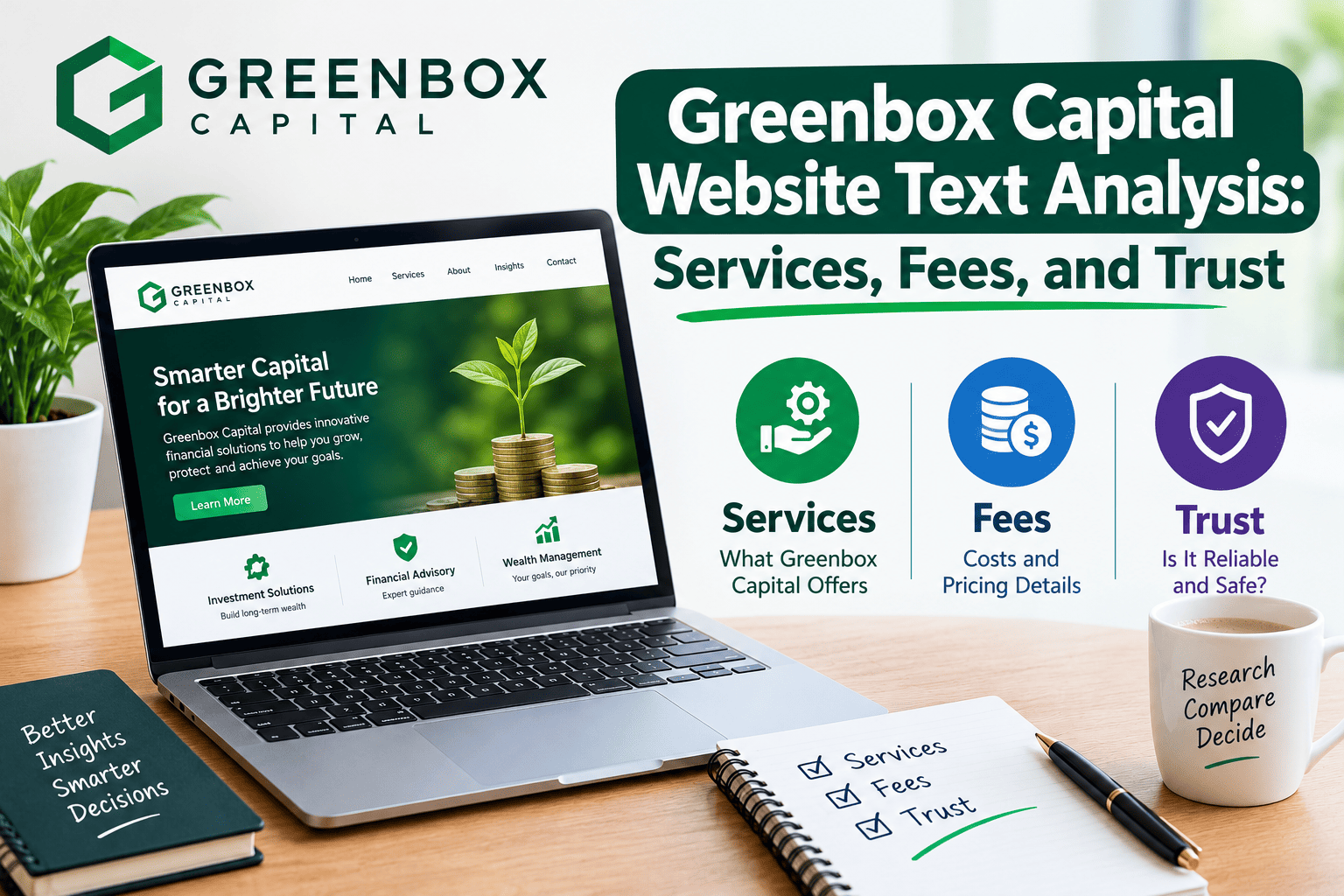
Greenbox Capital is an alternative business financing company that provides working capital solutions to eligible small and midsized businesses. Its website describes services such as merchant cash advances, invoice factoring, business lines of credit, and collateral loans. A careful website text analysis should examine its service descriptions, funding claims, eligibility requirements, fees, and company information. Businesses should review the complete financing agreement and repayment obligations before accepting an offer.
Introduction to Greenbox Capital Website Text Analysis
A website text analysis examines the information a company publishes to understand its services, target audience, business model, claims, and communication strategy. In the case of Greenbox Capital, the analysis focuses on how the company presents business financing solutions to small and midsized businesses.
The official website at GreenboxCapital.com describes alternative funding for businesses that may need working capital outside traditional banking channels. Its content emphasizes access to financing, application speed, flexible funding options, and personalized assistance. Reviewing these elements helps readers understand the company’s positioning while distinguishing promotional statements from details that require independent verification.
What Is Greenbox Capital?
Greenbox Capital presents itself as an alternative small-business lender serving eligible businesses in the United States, certain U.S. territories, and Canada through its relevant regional websites. Its company information explains that the business aims to help entrepreneurs obtain working capital without relying exclusively on traditional bank lending.
The website identifies Miami, Florida, as its U.S. office location and publishes contact information for prospective customers. These details provide useful starting points for evaluating the business. However, readers should independently confirm the applicable legal entity, contractual lender or funding provider, and relevant jurisdiction before entering a financing agreement.
Understanding the Main Message of the Website
The site’s central message is that businesses may be able to access funding more quickly through alternative financing than through conventional lending processes. Its homepage highlights funding availability, multiple financing products, and an application process designed for small-business owners.
This messaging targets entrepreneurs who need money for inventory, payroll, equipment, expansion, or short-term operating expenses. The language is practical and benefit-oriented because it connects financing products with common business challenges. Nevertheless, a strong analysis must consider not only what the website promises but also the conditions, costs, and risks that determine whether a particular offer is appropriate.
Greenbox Capital’s Main Financing Services
The website describes several funding options rather than presenting one product as suitable for every business. These include merchant cash advances, invoice factoring, business lines of credit, small-business loans, and collateral-based financing.
Each option works differently. Some provide capital in exchange for a share of future business revenue, while others involve selling outstanding invoices, borrowing against available credit, or pledging collateral. These differences matter because repayment schedules, total financing costs, security requirements, and consequences of missed payments may vary significantly. Applicants should compare the actual agreement for each product rather than assuming all advertised options have equivalent terms.
Merchant Cash Advances Explained
A merchant cash advance is one of the prominent services described on the website. Under this arrangement, a business receives funds and repays the agreed amount through a percentage of daily or weekly sales, according to the contract.
This structure may appeal to businesses with regular card transactions that need working capital quickly. However, a merchant cash advance is not necessarily equivalent to a conventional loan, and its costs can be substantial. Before accepting an offer, business owners should determine the total repayment amount, the expected collection frequency, the effective annualized cost where applicable, and how repayments could affect cash flow during slower sales periods.
Invoice Factoring and Cash Flow Management
Invoice factoring allows a business to receive cash against eligible unpaid invoices rather than waiting for customers to pay. The website explains that the business can receive the net amount initially and the remaining invoice value, less the applicable fee, when the customer pays.
This arrangement can help businesses facing long payment cycles, particularly companies that sell to other businesses on credit. However, factoring costs reduce the amount ultimately received, and the agreement may specify who bears the risk of unpaid invoices. Business owners should check customer notification requirements, recourse provisions, fees, and the treatment of disputed invoices before choosing this financing method.
Business Lines of Credit and Other Loans
A business line of credit generally allows an approved company to borrow up to a specified limit and repay amounts according to agreed terms. Interest or other charges depend on the specific product and contract. This can provide flexibility when working capital needs change from month to month.
The website also discusses small-business loans and collateral financing. Equipment purchases, expansion, inventory, and operating expenses may create different borrowing requirements, so applicants should identify the purpose of the funds before selecting a product. They should also confirm whether collateral is required, what repayment schedule applies, and whether early repayment reduces the total cost.
Funding Amounts and Approval-Speed Claims
Greenbox Capital’s website advertises funding amounts ranging from $3,000 to $500,000 and says qualifying businesses may receive approval within approximately two to five business hours, with funding potentially available in as little as one business day. These are company-published claims, not guarantees for every applicant.
Actual approval and disbursement depend on factors such as business revenue, documentation, underwriting, eligibility, and the specific offer. Readers should also distinguish an initial decision from final approval and the actual arrival of funds. A useful website analysis reports these claims accurately while explaining that applicants need confirmation of their own timeline and approved amount.
Eligibility Requirements for Applicants
The website’s U.S. funding information lists several qualification criteria, including minimum monthly revenue, time in business, ownership percentage, credit considerations, and business banking activity. The published requirements include monthly revenue of $10,000, at least five months in business, and minimum ownership of 51%, subject to stated exceptions and applicable conditions.
These criteria help readers determine whether an application may be worth exploring. They should not be treated as a universal approval checklist because requirements can differ by product, location, and underwriting decision. Applicants should verify the latest criteria directly with the appropriate funding team, especially if their business operates in a specialized industry or has unusual cash-flow patterns.
Website Fee Information and Financing Costs
Cost transparency is one of the most important elements in evaluating any financing website. The U.S. homepage displays a setup fee of at least $349 or 4% of the funding amount, along with a $75 disbursement fee for U.S.-based entities. It also lists repayment-term ranges for different funding positions.
These published figures should be checked against the current written offer because costs and conditions may vary. A complete comparison should include the amount deposited into the business account, total repayment, payment frequency, every fee, potential late charges, and early-payment conditions. A low advertised rate or fast approval does not automatically mean a financing product is inexpensive.
Website Text, Clarity, and Content Structure
The site’s text is organized around recognizable business needs. Service descriptions introduce the available products, company messaging explains its approach, and eligibility information helps potential applicants understand basic requirements. Frequently asked questions address practical concerns, including geographic coverage, funding amounts, application documents, and repeat funding.
This structure supports readers who want to move from general research to a more detailed evaluation. However, financial terminology can be unfamiliar to some business owners. Explanations of total borrowing costs, repayment examples, and the differences between loans and advances are particularly valuable because they help readers understand the consequences of signing an agreement rather than focusing exclusively on speed.
Trust Signals and Company Information
The website provides company information, a Miami office address, a telephone number, an email contact, service descriptions, and customer testimonials. These are useful signals because they give readers several ways to investigate the business and request clarification.
However, contact details and testimonials are not, by themselves, proof that a particular financing offer is suitable or inexpensive. Prospective customers should check independent business records, relevant licensing or registration requirements, complaint information, and the identity of the contracting party. They should also read the agreement carefully and avoid relying exclusively on statements appearing in promotional material.
Advantages Highlighted by the Website
The site’s strongest selling points are its variety of financing products, emphasis on quick decisions, and focus on businesses that may not fit traditional bank lending criteria. Having several potential funding structures can help an established company explore alternatives according to its cash-flow needs.
Another positive aspect is the publication of basic eligibility and fee information. When these details match the actual contract, they can help applicants prepare questions before speaking with a funding advisor. Still, benefits should be evaluated against the complete financial arrangement. Speed and convenience are valuable only when the repayment obligation remains manageable for the business.
Limitations and Questions Readers Should Investigate
A promotional website cannot answer every question a borrower needs to resolve. Advertised maximum funding amounts do not establish what a specific business will receive, and short approval times do not guarantee when money will be available. Similarly, descriptions of flexible repayments do not eliminate the need to understand the total amount due.
Applicants should request a written offer that clearly explains all costs, payment timing, default provisions, guarantees, collateral requirements, and any restrictions. They should also ask what happens if sales fall, an invoice remains unpaid, or a payment is missed. Independent financial or legal advice may be appropriate when an agreement is complex or the potential liability is significant.
Final Evaluation of Greenbox Capital’s Website
The official website communicates a clear focus on alternative business financing. It describes several funding products, outlines basic eligibility requirements, presents company information, and emphasizes speed and accessibility. These elements make it a useful starting point for researching potential funding options.
The most important distinction is between understanding the website and independently validating a financing decision. Website text can explain how a company presents its services, but it cannot establish that every claim applies to every borrower or that a particular offer represents good value. A careful reader should verify the company and its relevant legal entity, compare alternatives, and evaluate the complete contract before proceeding.
Frequently Asked Questions
What does Greenbox Capital website text analysis mean?
It means examining the company’s published website content to understand its financing services, eligibility criteria, fees, promotional claims, and trust signals.
Is Greenbox Capital a business financing company?
Its official website presents Greenbox Capital as an alternative business financing provider offering products such as merchant cash advances, invoice factoring, and other business funding options.
What should I check before accepting Greenbox Capital funding?
Review the written agreement, total repayment amount, fees, payment schedule, collateral requirements, personal guarantees, and consequences of missed payments. Compare the offer with other financing options.
Does Greenbox Capital guarantee approval within one day?
No. The website advertises potentially fast approval and funding, but actual timing depends on the applicant, underwriting, documentation, and the specific offer.
Conclusion
A detailed website review shows that Greenbox Capital focuses on alternative funding for small and midsized businesses, with several financing structures and an emphasis on accessibility. Its published service descriptions and basic fee information help readers begin their research, but they do not replace independent verification. Business owners should compare total costs, understand repayment obligations, and confirm all important conditions in writing before making a financing decision.
 Ethan Carter