

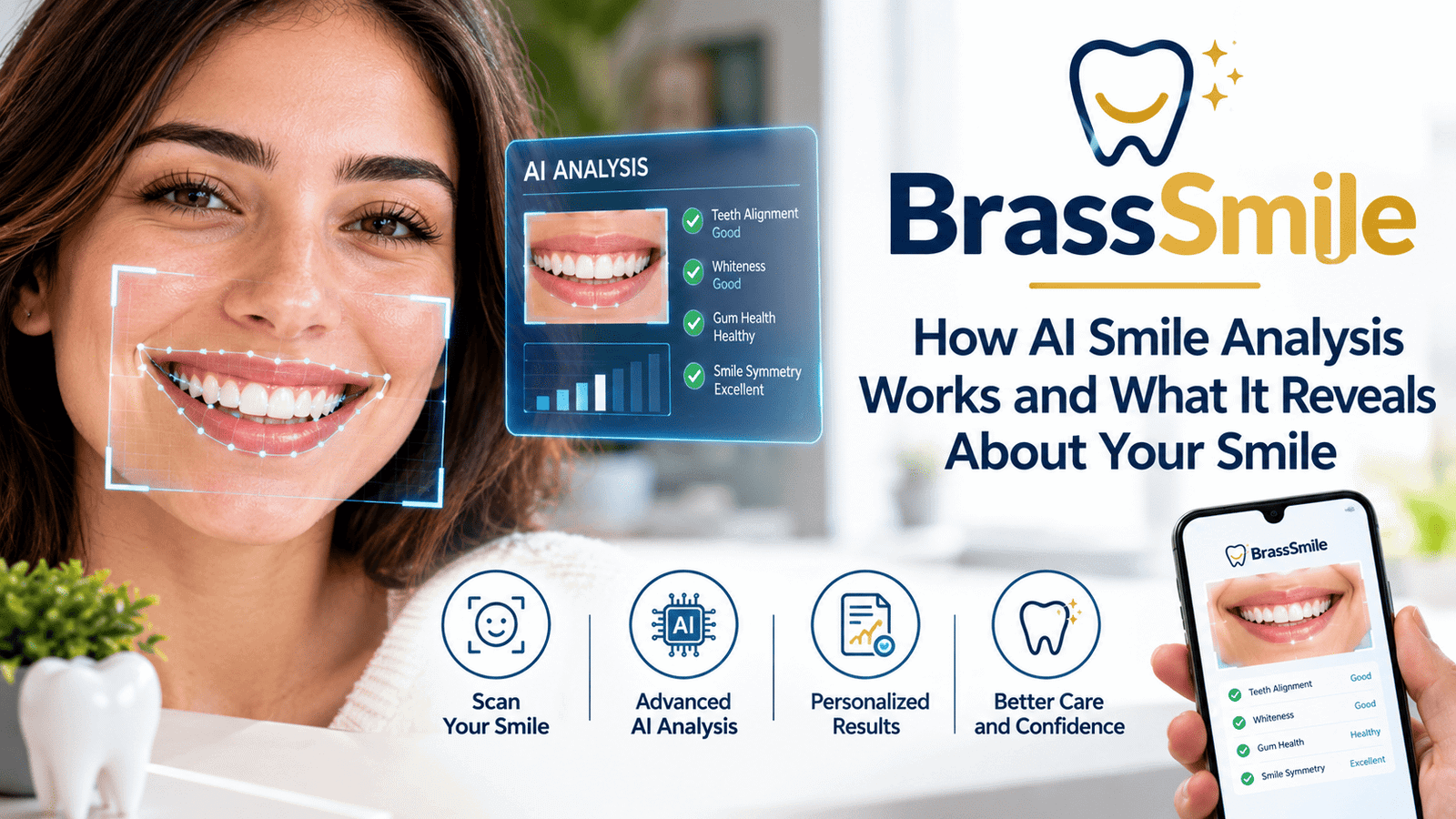
BrassSmile is a name associated with online content and websites covering different topics, including AI-powered smile analysis and dental care. Depending on the specific website, users may encounter educational information about smiles, digital assessments of visible dental features, or tools designed to preview cosmetic changes. AI smile analysis uses image-processing technology to examine features such as tooth visibility, apparent colour, spacing, and smile symmetry. However, the information generated by these tools should be treated as an initial guide rather than a medical diagnosis. Understanding the purpose of a particular BrassSmile website, how it handles personal information, and what its technology can genuinely assess is important before relying on its results.
What Is BrassSmile and Why Is It Getting Attention?
BrassSmile is a name that may lead users to different websites, so identifying the correct platform is an important first step. Some websites using similar names focus on general information, while others describe digital dental tools, AI smile assessments, or cosmetic smile previews. These services should not automatically be treated as part of the same organisation.
The growing interest in AI smile analysis reflects a wider change in how people explore dental aesthetics and oral care. Instead of relying exclusively on photographs, mirrors, or online descriptions, users can increasingly access software that examines visible facial and dental features and presents its observations in a structured format.
For someone curious about their smile, this technology can provide a starting point for understanding concepts such as tooth shade, spacing, alignment, and the balance between the teeth, lips, and gums. It may also help users prepare questions before speaking with a dental professional.
However, it is important to distinguish a cosmetic assessment from a clinical examination. A photograph cannot reveal every aspect of oral health, and an AI-generated report does not automatically establish that a tooth or gum is healthy or unhealthy.
How AI Smile Analysis Works
AI smile analysis combines computer vision, image processing, and machine-learning techniques to identify patterns in photographs. The exact process varies by software, but many systems follow a similar sequence.
1. Capturing a Smile Photograph
The process usually begins with a photograph showing the person’s face and teeth. Some tools request a full-face image, while others require a closer view of the mouth. The software then uses the submitted image as the basis for its assessment.
Image quality matters because shadows, camera angles, reflections, and differences in lighting can change how teeth appear. For example, warm indoor lighting may make teeth look more yellow, while bright lighting can obscure small details. A photograph therefore represents one visual snapshot rather than a complete picture of dental health.
2. Detecting Facial and Dental Features
The software processes the image to identify relevant points and shapes. Depending on its design, these may include the edges of visible teeth, the position of the lips, the gum line, the centre of the face, and the relative spacing between teeth.
These reference points help the system describe certain visible characteristics consistently. More advanced tools may also create digital models or simulated smile designs, although not every AI smile assessment offers these capabilities.
3. Assessing Visible Smile Characteristics
After identifying relevant features, the system may estimate tooth colour, apparent alignment, spacing, symmetry, or the amount of gum visible when smiling. Some platforms generate a written summary, while others display measurements, visual markers, or cosmetic previews.
The meaning of these results depends on the tool’s underlying technology. A system designed to assess smile aesthetics should not be assumed to detect cavities, diagnose gum disease, or identify every orthodontic concern.
4. Producing a Report or Visual Preview
The final stage may present a summary of the image, highlight certain features, or simulate possible cosmetic changes. This can make unfamiliar dental concepts easier to understand and provide a useful starting point for a conversation with a dentist.
A simulated result is not a guarantee of what treatment will achieve. Actual outcomes depend on oral health, tooth structure, bite, gum condition, and the treatment selected by a qualified professional.
What Can BrassSmile-Related AI Tools Reveal About a Smile?
The information available depends on the specific website and the functions it provides. Where an AI tool offers smile analysis, its results may cover several visible characteristics.
Tooth Colour and Apparent Brightness
Some tools estimate the visible shade of teeth from a photograph. This can help users understand how lighting, shadows, and surface staining influence the appearance of a smile.
However, a digital colour estimate is not a professional tooth-shade assessment. Camera settings, screen brightness, and image processing can all affect the result. A photograph alone cannot establish the cause of discolouration.
Smile Symmetry
AI software may compare the relative positions of visible features on the left and right sides of a smile. This can produce an approximate description of symmetry or highlight differences in how the teeth appear in an image.
Natural smiles are rarely perfectly symmetrical. Small differences are common and do not necessarily indicate a dental problem. A numerical score or visual comparison should not be interpreted as a measure of personal attractiveness or health.
Tooth Spacing and Alignment
Depending on its capabilities, software may identify visible gaps, overlapping teeth, or differences in the apparent positioning of front teeth. Such observations can help users learn about common dental alignment terms.
Nevertheless, a single photograph does not show the full relationship between the upper and lower teeth. An orthodontist or dentist must assess the bite and other relevant features before recommending treatment.
Gum Visibility and Smile Shape
Some systems examine how much gum is visible when a person smiles and how the teeth relate to the lips. These features may be relevant to cosmetic smile planning.
The amount of visible gum varies naturally between individuals. An AI tool cannot decide on its own whether a particular smile characteristic requires treatment or whether changing it would improve oral health.
BrassSmile and Digital Smile Design: What Is the Difference?
AI smile analysis and digital smile design are related, but they are not identical.
AI smile analysis generally focuses on identifying or describing features in an image. Digital smile design, by contrast, involves planning or visualising possible changes to the appearance of teeth and the overall smile. Depending on the system, this may involve digital measurements, photographs, scans, and professional treatment planning.
Some platforms combine both functions. Others provide only a basic image assessment or cosmetic preview. Users should check the features of the specific service rather than assuming that every website using the BrassSmile name offers the same technology.
In professional dentistry, digital tools can support communication between a dentist and patient. A preview can help explain possible treatment goals, but it should not be mistaken for a final clinical plan. The dentist must consider the person’s oral health, individual anatomy, and practical treatment options before deciding what is appropriate.
Can AI Smile Analysis Accurately Assess Dental Health?
AI can identify patterns in images, but its accuracy depends on the particular system, the quality of the photographs, the data used to develop it, and the way its performance has been tested.
A review of smile analysis in dentistry and orthodontics describes emerging uses of artificial intelligence and automated systems while highlighting limitations associated with image capture, measurement, and interpretation. This means that AI-based assessments can be useful in some settings, but their results should not automatically be treated as definitive.
It is especially important to distinguish between identifying a visible feature and diagnosing a health condition. A photograph may show apparent discolouration or a visible gap, but it cannot reliably reveal every cavity, early gum problem, or issue beneath the surface of a tooth.
For that reason, an AI-generated report should be used as supplementary information. If a tool flags something that concerns you, a dentist can determine whether it requires attention through an appropriate examination and, when necessary, additional diagnostic tests.
Benefits of Using AI for Smile Assessment
When used with realistic expectations, AI smile analysis can offer several practical advantages.
A clearer understanding of visible features: Structured observations can help users learn what terms such as symmetry, tooth shade, and spacing mean.
Visual explanations: Some systems provide annotated photographs or simulated previews that make certain concepts easier to understand.
Preparation for a dental appointment: Users can make a list of questions about tooth colour, alignment, sensitivity, or other concerns before speaking with a dentist.
Convenient access to introductory information: Online tools may allow users to explore basic concepts without immediately arranging a cosmetic consultation.
Support for treatment discussions: Where appropriate, digital previews can help patients and dental professionals discuss possible aesthetic goals.
These benefits depend on the quality and purpose of the tool. A convenient interface does not, by itself, prove that a system is clinically validated or suitable for making healthcare decisions.
Limitations and Privacy Considerations
Before using a BrassSmile-related website or another AI smile tool, consider what it can actually do and how it handles the information you provide.
AI Results May Be Inconsistent
Different systems may assess the same photograph differently. Even one system can produce different results when lighting, head position, or camera distance changes. A score should therefore not be treated as an objective judgment of a person’s smile.
Image Analysis Cannot Replace a Dental Examination
AI-generated observations cannot provide the complete clinical information obtained through a dental examination. Do not delay professional care because a digital assessment appears reassuring.
Check the Website’s Identity
Websites with similar names may have different owners, services, and policies. Confirm the exact domain, review the About and Contact pages, and check whether the provider clearly explains its purpose and limitations.
Understand How Your Photographs Are Used
A face photograph may contain personal information. Before uploading an image, read the privacy policy to understand how it is collected, stored, processed, shared, and retained. Check whether deletion options are available and whether the service requires an account.
Avoid assuming that a website is secure simply because it uses AI or describes its service as private. Look for clear, specific explanations of its data practices.
Everyday Smile Care: Practical Habits That Matter
Technology can help people learn about visible smile features, but daily oral hygiene remains essential.
Brush your teeth twice a day with fluoride toothpaste and use a soft-bristled toothbrush. Clean between your teeth daily with dental floss or another suitable interdental cleaning tool. These habits help remove plaque from areas that a toothbrush may not reach effectively.
Limit frequent exposure to sugary foods and drinks, and choose water regularly. Arrange routine dental visits according to your dentist’s advice, especially if you have ongoing concerns about your teeth or gums.
If your teeth appear discoloured, remember that there are several possible causes, including surface stains, natural tooth structure, and changes associated with age. Brushing more aggressively will not necessarily make teeth whiter and may damage the teeth or gums. A dentist can help identify the cause and explain suitable options.
Avoid choosing whitening products or dental treatments solely because an AI tool recommends a particular cosmetic change. Professional guidance is particularly important if you experience tooth sensitivity, persistent discomfort, gum bleeding, or a sudden change in tooth colour.
Who May Benefit From AI Smile Analysis?
AI smile analysis may interest people who want to understand how digital dentistry works, learn basic smile terminology, or prepare for a discussion about cosmetic dental options.
It may also be useful for people comparing digital smile-design services, provided they understand the difference between an educational preview and a clinically supported assessment.
However, it is not necessary for everyone. Someone seeking routine oral care can continue to rely on established hygiene habits and professional dental advice without using an AI tool. People with symptoms or specific health concerns should prioritise an appropriate dental examination rather than relying on an image-based assessment.
The most useful approach is to treat technology as an optional educational resource, not as a requirement for having a healthy smile.
Frequently Asked Questions About BrassSmile
What is BrassSmile?
BrassSmile is a name used by multiple websites with different purposes. Some focus on general informational content, while others describe AI smile analysis or digital dental tools. Check the exact domain to identify the service you are researching.
How does AI smile analysis work?
AI smile analysis uses image-processing and machine-learning methods to examine visible features in a photograph. Depending on the software, it may assess apparent tooth colour, spacing, symmetry, and other aspects of smile appearance.
Can BrassSmile AI detect cavities?
You should not assume that a BrassSmile-related smile assessment can detect cavities. Cosmetic image analysis and clinical diagnostic tools serve different purposes. A dentist must assess suspected dental problems using appropriate examination methods.
Can AI smile analysis replace a dentist?
No. AI can provide supplementary visual information, but it cannot replace a comprehensive dental examination. A qualified dentist can assess factors that may not be visible in a photograph.
Is AI smile analysis always accurate?
No. Results depend on the software, image quality, and the system’s validation. Lighting, camera angles, and other factors can affect the analysis, so results should be interpreted cautiously.
Is it safe to upload a smile photo?
Safety depends partly on the website’s data-handling practices. Review its privacy policy before uploading a photograph, and check how images are stored, used, shared, and deleted.
Does AI smile analysis help with teeth whitening?
A tool may estimate visible tooth colour or simulate a brighter appearance. However, a preview cannot determine the cause of discolouration or guarantee a whitening result. Ask a dentist about suitable options if you are considering treatment.
Final Thoughts
BrassSmile-related websites and AI smile analysis tools reflect the growing use of digital technology in exploring dental aesthetics and oral care. Depending on the platform, these tools may help users understand visible smile features, explore cosmetic previews, and prepare questions for a dental professional.
Their value depends on understanding their limitations. An AI assessment is not a diagnosis, a digital preview is not a guaranteed outcome, and a photograph cannot reveal every aspect of oral health. Before using a service, verify the website, review its privacy practices, and check what its technology genuinely offers.
Ultimately, the best use of AI smile analysis is to support informed questions and conversations—not to replace professional dental advice or the everyday habits that help maintain healthy teeth and gums.
 Ethan Carter